Amateur Radio Satellite Operations and the International Space Station
Amateur radio has always been about exploration and innovation—and one of its most fascinating frontiers is communication via satellites and the International Space Station (ISS). These activities allow radio amateurs to make contacts over vast distances using equipment orbiting hundreds of kilometers above the Earth. It’s a thrilling blend of science, technology, and global friendship.
1. Communicating Through Amateur Radio Satellites
Since the 1960s, amateur radio operators have been launching and using small satellites—known as “AMSATs” (Amateur Satellites)—to extend their communication range far beyond the line of sight.
These satellites function as orbiting repeaters, receiving signals on one frequency (uplink) and retransmitting them on another (downlink), allowing two stations thousands of kilometers apart to make contact.
Modern amateur satellites, such as AO-91 (Fox-1B) and PO-101 (Diwata-2), operate in various frequency bands (VHF, UHF, L-band, and S-band) and support both FM and SSB modes. Operating through these satellites requires tracking their orbits, using directional antennas, and precise timing—but the reward of hearing your signal come back from space is unforgettable.
2. The International Space Station (ISS) and Amateur Radio
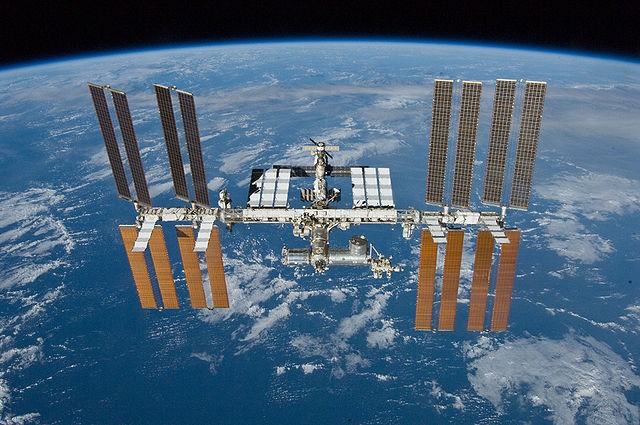
The ISS is not only a marvel of engineering but also home to a fully operational amateur radio station, known as ARISS (Amateur Radio on the International Space Station). This program, a collaboration between amateur radio organizations and space agencies (like NASA and ESA), allows licensed operators to communicate directly with astronauts aboard the station.
The ARISS station operates primarily on VHF and UHF frequencies, and depending on its current configuration, it can support:
3. SSTV from the ISS
One of the most exciting ISS activities for radio amateurs is SSTV (Slow Scan Television). During special events, the ISS transmits images—usually related to space exploration, anniversaries, or educational themes—using analog SSTV signals on 145.800 MHz FM.
Amateurs around the world tune in, record the signal, and decode the images using software like MMSSTV. Each transmission pass can deliver unique pictures directly from space—an inspiring way to connect with the ISS and share the experience globally.
4. The ISS Voice Repeater
In recent years, the ISS has also operated as a cross-band FM repeater, making it possible for amateurs on Earth to contact each other through the station.
Typically, the uplink is on 145.990 MHz and the downlink on 437.800 MHz, though frequencies can vary. The repeater works automatically, allowing stations within the ISS’s footprint—often spanning thousands of kilometers—to make real-time voice contacts.
5. Why These Activities Matter
Operating via satellites or the ISS is more than just a technical challenge—it embodies the spirit of amateur radio:
Conclusion
Amateur radio through satellites and the International Space Station combines innovation, education, and adventure. Whether you’re decoding SSTV images from orbit, making a contact through the ISS repeater, or chasing a low-Earth satellite across the sky, each transmission reminds us of what makes amateur radio extraordinary—the endless curiosity to explore, connect, and learn.